Last year at this time, as I looked forward to
2015, I said I wanted my theme for the coming year to be "Stretch". I
posted on Facebook:
"I want to stretch while doing Yoga and while waking up
from restful sleep, stretch to reach beyond my
physical/emotional/intellectual comfort zones, stretch my hard-earned
dollars, and stretch my mind. Unfortunately I need stretch pants as I
end the year."
And stretch I did, forward and backward, up and
down. Sometimes I stretched like a lazy cat in a ray of sunshine,
sometimes like a tense rubber band ready to snap (actually I snapped a
few times).
It's been both a horrible and wonderful 2015, a year
that has stretched us every which way imaginable. The Dishman family
said a tragic goodbye to their mother and grandmother, Louanna, and then too
soon after my Bruns girls said goodbye to their grandmother, Marjorie
Violet. Losing two mothers-in-law within a month certainly stretched my
capacity for supporting others in their grief, while simultaneously
dealing with my own emotions. We said a tearful goodbye to a beloved
family home, the Stone House, the hub of Esker activity during Jubilee
Days and Holiday meals. Craig had a health scare that changed our vision
of our future for a while, I had a crazy mishap with a chicken bone
that is now straining me financially as the bills roll in. Craig's dad
continues to battle health problems and missing his wife. Broken
appliances (a "shocking" experience with one), a windstorm that caused
damage to our property, expensive car repairs...I think our budget has
been stretched well beyond our comfort zone this year.
But life
goes on in wonderful ways. My daughter moved into a beautiful new home
and a few months later we learned we are going to be grandparents--in
just about 6 weeks! One daughter got engaged to a great guy. Another
daughter started a new exciting job. A niece got married and had a
fabulous family celebration, another niece graduated from college, a
nephew started a career in film. My brother-in-law returned safely from a
tour of duty. All my sisters' husbands found work. My parents are
healthy and active. We have so much to be grateful for.
Personally I found so much happiness kayaking on Summit Lake and making
new, amazing friends along the way. That kayak was the best birthday
and Mothers Day gift I could have ever, ever received! There is no
better feeling than floating on that lake with my friends and
anticipating the beauty of misty sunrises or brilliant sunsets. I
stretched beyond my comfort zones by facing my fear of water and having
adventures on my own (loading and unloading my kayak all by myself). I
also found great pleasure in taking photos with my iPhone and sharing
them with others. I continue to love my job and I look forward to
spending time with my husband and family. I've also enjoyed being a new
dog owner -- well mostly. Oh, and the recent gift of a ukulele is
stretching my mind and fingers in delightful, yet sometimes frustrating,
ways!
I think my word for 2016 will be "FOCUS". I want to focus
on appreciating the little things in life, on being in the present
moment. I also want to focus on getting my home in order, to declutter,
organize and spruce it up a bit. Of course I want to focus on
improving my health -- losing weight would be nice but my goal is to be
healthy and active, so I can continue meeting the needs of my family and enjoying live. I
also want to focus on my finances, cutting back on wasteful spending
and thinking more about saving. Of course I would like to focus with my
iPhone and take a lot more pictures, and focus on being more creative,
along with my fun and creative friends. Most of all I want to focus on
being an attentive Grammy Julie to baby Mason! I can't wait! 2016 is
going to be an awesome year.
Thursday, December 31, 2015


Friday, November 13, 2015
All I Want for Christmas...
What I want for Christmas, before I can decorate, shop, wrap, and
cook is for all children, no matter what their background, to be treated
the same and given food and shelter -- whether they are born in the US,
Mexico, Syria or anywhere else; whether they are Christian, Muslim,
atheist or whatever; whether they are on welfare, are orphans, or their
parents are considered criminals.
It’s so easy for us to label groups as “Refugees” or “Homeless” or “Illegal Immigrants”, to put ourselves above and beyond them, but most of the PEOPLE in these groups are children. Hungry, cold, frightened children, living in tents, boxes, cars, under bridges, with no food or clean water.
For a moment, think of your own child. Imagine being forced from your home for any reason. It burns, a tornado hits, you lose your job and the bank takes it, someone forces you to leave your homeland because of your political or religious beliefs. It can happen – don’t think that it can’t.
Imagine your child cries in hunger or thirst and you have no food or clean water to give it. Imagine it shivers with the cold and you have no dry blanket to cover it, no bed for it to lie on. Imagine it rains or snows and you have no shelter for its head, not even an umbrella. Imagine it’s sick and you have no medicine to give, not even a Band-Aid to cover a bloody knee. These are the refugees, the homeless, the immigrants, and no matter how good, responsible, hard-working, American or Christian you think you are, this could be your child.
Labels, borders and boundaries are man-made, created and perpetuated by us. Yes us. A hungry child is a hungry child, no matter where it lives, no matter who its parents are. Before you buy that next Christmas decoration you don’t really need, or that gift your loved one doesn’t really need, consider helping a child, any child. The season of Christmas, the season of Love and Light, should know no boundaries. Real love knows no boundaries.
It’s so easy for us to label groups as “Refugees” or “Homeless” or “Illegal Immigrants”, to put ourselves above and beyond them, but most of the PEOPLE in these groups are children. Hungry, cold, frightened children, living in tents, boxes, cars, under bridges, with no food or clean water.
For a moment, think of your own child. Imagine being forced from your home for any reason. It burns, a tornado hits, you lose your job and the bank takes it, someone forces you to leave your homeland because of your political or religious beliefs. It can happen – don’t think that it can’t.
Imagine your child cries in hunger or thirst and you have no food or clean water to give it. Imagine it shivers with the cold and you have no dry blanket to cover it, no bed for it to lie on. Imagine it rains or snows and you have no shelter for its head, not even an umbrella. Imagine it’s sick and you have no medicine to give, not even a Band-Aid to cover a bloody knee. These are the refugees, the homeless, the immigrants, and no matter how good, responsible, hard-working, American or Christian you think you are, this could be your child.
Labels, borders and boundaries are man-made, created and perpetuated by us. Yes us. A hungry child is a hungry child, no matter where it lives, no matter who its parents are. Before you buy that next Christmas decoration you don’t really need, or that gift your loved one doesn’t really need, consider helping a child, any child. The season of Christmas, the season of Love and Light, should know no boundaries. Real love knows no boundaries.
Thursday, October 22, 2015
Back in Time After Time
I hold a 305 year old book in my hands and feel its old leather binding flake and crumble. The front cover falls off, and I know the back cover eventually will also, as I gently press the book down on the glass and I try to get a good scan of all 650 pages. It kills me to know I am destroying the rare book while scanning it, in an effort to preserve and share its contents. Paper, ink and leather from 1710 England. I kind of worry about breathing in its dust.

I wonder who else has held this treasure in their hands. Who were they? What was life like for them then? Could they even conceive that someone might hold this book in their hands more than 300 years later? Could they even dream of the technology that is allowing me to scan and share it today? What would they think about life here if they were suddenly transported here? What would they think that a library was going to throw their book away, but it was saved by an elderly Quaker man who recognized a treasure, then brought it to a professor at a Quaker seminary, who asked me to scan and preserve it?
 I hope that a relic from the past will fall out of the pages, a hand written note or a piece of ribbon, or something else that served as a book mark. But I realize while turning from page to page that no one else has actually read this book, at least not the entire thing, because there are pages that have been cut improperly and never separated. I can't read it myself because it's in Spanish, but the writing is beautiful. I know it's about religion, and I know a Quaker wrote the words in the late 1600's, then the words were translated to Spanish and printed 1000 times and shipped or hand delivered to Quakers, to help spread the message to other lands or to preserve the message. Maybe I'll have to try to read the original English version someday.
As I sit in a Quaker seminary in 2015, in a building built in the 1870s and later named for the author of the book, I want to randomly pick a page and read what it says, to see if the centuries old text speaks to me today. Using my iPhone I try to translate some of it but the app translates "Tembladores" as "Shaker" instead of "Quaker", so I laugh and doubt the validity of the translation, but I search for more information about it. I look for it's value on eBay but can't find this original edition, just later printings. I'm interrupted when I get a text from my daughter at school, reminding me of her upcoming doctor appointment.
I get on my work computer to Google a better translation but get distracted and see on Facebook that today is "Back to the Future Day", or the future date Marty McFly and Doc had programmed into their time machine in the movie "Back to the Future II".

I haven't watched the movie for a while so I don't remember the specifics of why they chose this date and what happened while they were "here", but I do recall there were many futuristic gadgets and clothing items. I think I'll have to watch the movie with my family this evening, if we have it on DVD. I'm sure it's on Netflix but our Internet is too slow on Dishman Hill for it to stream without constant buffering.
Now I'm trying to think back to October of 1985, when "Back to the Future II" takes place, and what I was doing, or what life was like for me then. Did I imagine what my life would be like in 2015? I was 23, married less than a year, and we had just moved from our one-bedroom apartment to a 2 bedroom rental home in a small town in northern Indiana. We were really curious about all the "primitive" Amish living near us because there were none like them in our hometown of Hagerstown. I was working part-time in retail and the clothes I wore to work had huge shoulder pads and I tried to make my hair big. My husband was an accountant for a telephone company. He wore a suit and tie to work every day. He shined his shoes once a week.
 We drove used cars -- the Monte Carlo had an 8-track player, the gray Honda was basic but got good gas mileage and was practical. Our favorite TV show was the cutting edge Miami Vice and we made sure we were home when it came on, or we set the video player to tape it so we could watch it later, but we usually forgot and had to wait for reruns. We had a phone with a cord -- it hung on our wall -- and we paid for long distance calls, which meant we had to limit our contact with our parents and friends. We felt isolated 3 hours from home. I think we bought an answering machine so we could get important messages while we were out.
We didn't own a computer although my husband sometimes used one at work to print reports; he used an adding machine all the time. At home we had a calculator, a nice expensive one my husband bought in college. I had a Polaroid camera but was very careful about how many pictures I took because the film was pretty expensive. I bought a disc camera sometime around that time and loved taking the disc to the drug store to get developed, then going back a week later to see how my pictures turned out -- only a few of them were worth putting in a photo album, the rest were stuck back in the envelope and into a box somewhere. I was learning how to cook using my microwave and crock pot. We each had an alarm clock next to our sides of the bed. I think mine was digital but my husband's was one of those flip radio alarm clocks that clicked every minute as the next number tumbled over. We had a small stereo and a boom box that played cassette tapes.
 We looked forward to having 2 or 3 children sometime in the next 5 years, and
assumed we would work our way up the ladder in our careers and own a
nicer, larger home and nicer cars, and hopefully travel around the
country someday. But other than that I don't think we thought too much
about what life would look like 30 years into the future. We couldn't even imagine being that old!
We looked forward to having 2 or 3 children sometime in the next 5 years, and
assumed we would work our way up the ladder in our careers and own a
nicer, larger home and nicer cars, and hopefully travel around the
country someday. But other than that I don't think we thought too much
about what life would look like 30 years into the future. We couldn't even imagine being that old!
I remember a book I borrowed from the library when I was living there in Goshen. It was written by a Quaker Oats heiress about her life of luxury and all her travels from 1906 until the 1950's. Even during the depression her family had plenty of money because Quaker Oats was inexpensive and "stuck to your ribs", which meant it was a staple in most households when times were tough. I marveled at how much our world had changed since she was a small girl -- little things like deodorant and bigger things like having to crank a car to get it started, traveling across the country on steam trains, and across the ocean on steam ships. Her life seemed so romantic back then. I had never heard the term Quaker in any other context than Quaker Oats.
Thirty years later I laugh when I get calls that are meant for Quaker Oats. Even with today's technology people get wrong information -- and they can use it too easily, unfortunately.

Thirty years later I have a different husband, something I never imagined, and I live back in Hagerstown. Between the two of us we have 5 kids and we keep in contact with them and our parents and friends via cell phones and e-mail. We even play games with them at a distance using our cell phones. My daughter texts me ultrasound pictures of the baby she is carrying. We don't use alarm clocks, we use our cell phones. We don't have a camera because our cell phones take and share pictures so easily. I use my phone as a calculator too. We use our phones and tv to listen to all the music we used to listen to back in the 70's and 80's. We're going to a Peter Frampton concert this weekend; he was hot in the 70's but barely heard of in the 80's, so it's nice he's made a comeback. My husband's favorite old tv show is Miami Vice and he often watches it on DVD -- it makes him think of the good old days, I guess.

I still live modestly and drive a used gray Honda. My career never flourished and I make just double what I made 30 years ago, which isn't much when you consider inflation, but I love my work and I've had wonderful experiences. The none-stressful job leaves me time, space and energy to focus on my passion of iPhone photography -- I can take, edit and print beautiful photos from my phone.
I still have Amish neighbors because an Amish community moved to Hagerstown several years ago. When I see them with their plain clothes and horse and buggies, or working on their farms, I imagine their life is very much like the life of Quakers in the 1700's, although I often see their young people using cell phones and playing volleyball.

I still borrow books from the library, but I sometimes download them and read them on my "antiquated" Kindle. I can't imagine life without real books. I'll always love old books especially -- their smell, the feel of the old paper.
This old book from 1710 makes me think and wonder. It's old and smelly, and it's falling apart, but it's full of intention, full of history, full of some kind of good energy intended for future generations, and I feel special to have held it in my hands before it's gone for good. When I'm done scanning the book, a professor will e-mail the pdf of the Spanish translation of Quaker theology to his friends in Cuba, a country that I imagine is purposely stuck in something like the "November 12, 1955" of "Back to the Future", with old cars, old styles, old thoughts.

I'm wondering how sharing ideas that are over 305 years old can make a difference for the professor's friends in Cuba, or how saving the text of the old book will impact others in the future. I also wonder how long it will take for the technology that allows us to scan and store this book to become obsolete and inaccessible, maybe gone forever.
I guess only time will tell.

I wonder who else has held this treasure in their hands. Who were they? What was life like for them then? Could they even conceive that someone might hold this book in their hands more than 300 years later? Could they even dream of the technology that is allowing me to scan and share it today? What would they think about life here if they were suddenly transported here? What would they think that a library was going to throw their book away, but it was saved by an elderly Quaker man who recognized a treasure, then brought it to a professor at a Quaker seminary, who asked me to scan and preserve it?
 I hope that a relic from the past will fall out of the pages, a hand written note or a piece of ribbon, or something else that served as a book mark. But I realize while turning from page to page that no one else has actually read this book, at least not the entire thing, because there are pages that have been cut improperly and never separated. I can't read it myself because it's in Spanish, but the writing is beautiful. I know it's about religion, and I know a Quaker wrote the words in the late 1600's, then the words were translated to Spanish and printed 1000 times and shipped or hand delivered to Quakers, to help spread the message to other lands or to preserve the message. Maybe I'll have to try to read the original English version someday.
 As I sit in a Quaker seminary in 2015, in a building built in the 1870s and later named for the author of the book, I want to randomly pick a page and read what it says, to see if the centuries old text speaks to me today. Using my iPhone I try to translate some of it but the app translates "Tembladores" as "Shaker" instead of "Quaker", so I laugh and doubt the validity of the translation, but I search for more information about it. I look for it's value on eBay but can't find this original edition, just later printings. I'm interrupted when I get a text from my daughter at school, reminding me of her upcoming doctor appointment.
I get on my work computer to Google a better translation but get distracted and see on Facebook that today is "Back to the Future Day", or the future date Marty McFly and Doc had programmed into their time machine in the movie "Back to the Future II".

I haven't watched the movie for a while so I don't remember the specifics of why they chose this date and what happened while they were "here", but I do recall there were many futuristic gadgets and clothing items. I think I'll have to watch the movie with my family this evening, if we have it on DVD. I'm sure it's on Netflix but our Internet is too slow on Dishman Hill for it to stream without constant buffering.
Now I'm trying to think back to October of 1985, when "Back to the Future II" takes place, and what I was doing, or what life was like for me then. Did I imagine what my life would be like in 2015? I was 23, married less than a year, and we had just moved from our one-bedroom apartment to a 2 bedroom rental home in a small town in northern Indiana. We were really curious about all the "primitive" Amish living near us because there were none like them in our hometown of Hagerstown. I was working part-time in retail and the clothes I wore to work had huge shoulder pads and I tried to make my hair big. My husband was an accountant for a telephone company. He wore a suit and tie to work every day. He shined his shoes once a week.
We drove used cars -- the Monte Carlo had an 8-track player, the gray Honda was basic but got good gas mileage and was practical. Our favorite TV show was the cutting edge Miami Vice and we made sure we were home when it came on, or we set the video player to tape it so we could watch it later, but we usually forgot and had to wait for reruns. We had a phone with a cord -- it hung on our wall -- and we paid for long distance calls, which meant we had to limit our contact with our parents and friends. We felt isolated 3 hours from home. I think we bought an answering machine so we could get important messages while we were out.We didn't own a computer although my husband sometimes used one at work to print reports; he used an adding machine all the time. At home we had a calculator, a nice expensive one my husband bought in college. I had a Polaroid camera but was very careful about how many pictures I took because the film was pretty expensive. I bought a disc camera sometime around that time and loved taking the disc to the drug store to get developed, then going back a week later to see how my pictures turned out -- only a few of them were worth putting in a photo album, the rest were stuck back in the envelope and into a box somewhere. I was learning how to cook using my microwave and crock pot. We each had an alarm clock next to our sides of the bed. I think mine was digital but my husband's was one of those flip radio alarm clocks that clicked every minute as the next number tumbled over. We had a small stereo and a boom box that played cassette tapes.

I remember a book I borrowed from the library when I was living there in Goshen. It was written by a Quaker Oats heiress about her life of luxury and all her travels from 1906 until the 1950's. Even during the depression her family had plenty of money because Quaker Oats was inexpensive and "stuck to your ribs", which meant it was a staple in most households when times were tough. I marveled at how much our world had changed since she was a small girl -- little things like deodorant and bigger things like having to crank a car to get it started, traveling across the country on steam trains, and across the ocean on steam ships. Her life seemed so romantic back then. I had never heard the term Quaker in any other context than Quaker Oats.
Thirty years later I laugh when I get calls that are meant for Quaker Oats. Even with today's technology people get wrong information -- and they can use it too easily, unfortunately.

Thirty years later I have a different husband, something I never imagined, and I live back in Hagerstown. Between the two of us we have 5 kids and we keep in contact with them and our parents and friends via cell phones and e-mail. We even play games with them at a distance using our cell phones. My daughter texts me ultrasound pictures of the baby she is carrying. We don't use alarm clocks, we use our cell phones. We don't have a camera because our cell phones take and share pictures so easily. I use my phone as a calculator too. We use our phones and tv to listen to all the music we used to listen to back in the 70's and 80's. We're going to a Peter Frampton concert this weekend; he was hot in the 70's but barely heard of in the 80's, so it's nice he's made a comeback. My husband's favorite old tv show is Miami Vice and he often watches it on DVD -- it makes him think of the good old days, I guess.

(http://itsmusicfashionlife.com/wp-content/uploads/2013/08/vice.jpg)
I still live modestly and drive a used gray Honda. My career never flourished and I make just double what I made 30 years ago, which isn't much when you consider inflation, but I love my work and I've had wonderful experiences. The none-stressful job leaves me time, space and energy to focus on my passion of iPhone photography -- I can take, edit and print beautiful photos from my phone.
I still have Amish neighbors because an Amish community moved to Hagerstown several years ago. When I see them with their plain clothes and horse and buggies, or working on their farms, I imagine their life is very much like the life of Quakers in the 1700's, although I often see their young people using cell phones and playing volleyball.

I still borrow books from the library, but I sometimes download them and read them on my "antiquated" Kindle. I can't imagine life without real books. I'll always love old books especially -- their smell, the feel of the old paper.
This old book from 1710 makes me think and wonder. It's old and smelly, and it's falling apart, but it's full of intention, full of history, full of some kind of good energy intended for future generations, and I feel special to have held it in my hands before it's gone for good. When I'm done scanning the book, a professor will e-mail the pdf of the Spanish translation of Quaker theology to his friends in Cuba, a country that I imagine is purposely stuck in something like the "November 12, 1955" of "Back to the Future", with old cars, old styles, old thoughts.

I'm wondering how sharing ideas that are over 305 years old can make a difference for the professor's friends in Cuba, or how saving the text of the old book will impact others in the future. I also wonder how long it will take for the technology that allows us to scan and store this book to become obsolete and inaccessible, maybe gone forever.
I guess only time will tell.
Friday, September 11, 2015
Friendship, creativity and inspiration
Three women met early on a
misty morning to launch their kayaks. Two had known each other for only a
summer, two had met face to face only a handful of times, two had never
met and didn't know each other at all. Photography and Facebook drew
them together in the first place; sunshine, water, conversation and a
shared love of capturing the beauty of nature filled them with with a
peace and happiness that is difficult to explain. Kindred spirits were recognized during the two hour kayaking journey and new friendships grew.

It's hard for others to understand how sitting still for five minutes and trying to capture the image of a drip of water falling off a paddle can serve as meditation and feel so fulfilling. None of us questioned why the other wanted to do it; we understood perfectly well -- it was natural to each of us. We each tried to do it ourselves. It wasn't a competition but rather a nudge to create our own version, or our own interpretation of the moment. None of us knew the other two had accomplished it until we returned home and saw the photos they had posted.
It's so much fun to share this creative journey with Martha Hall Bowman and Julie Farmer King. I can't wait for other kindred spirits to join in. Michelle Hessdoerfer Northrup, we have to figure out how to get you and your kayak there soon!


It's hard for others to understand how sitting still for five minutes and trying to capture the image of a drip of water falling off a paddle can serve as meditation and feel so fulfilling. None of us questioned why the other wanted to do it; we understood perfectly well -- it was natural to each of us. We each tried to do it ourselves. It wasn't a competition but rather a nudge to create our own version, or our own interpretation of the moment. None of us knew the other two had accomplished it until we returned home and saw the photos they had posted.
 |
| My interpretation |
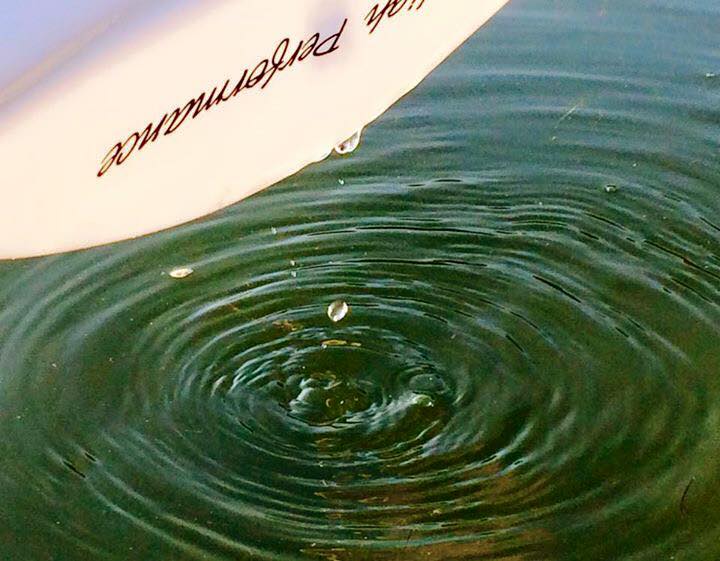 |
| Julie King's interpretation |
 |
| Martha Bowman's interpretation |
It's so much fun to share this creative journey with Martha Hall Bowman and Julie Farmer King. I can't wait for other kindred spirits to join in. Michelle Hessdoerfer Northrup, we have to figure out how to get you and your kayak there soon!
Friday, June 5, 2015
Muskrat Love and Goose Poop

Last night I floated next to an otter. It might have been a muskrat, not an otter, but I'll say it was an otter because otters are cuter. He really could have been an otter as there are river otters at Summit Lake. Either way, he was a cute little furry animal, floating alone in the middle of lake, a couple of yards from my kayak. He looked up at me and dove straight down, popping up a few yards away. I looked around, smiled to myself and thought "Ahhhhh, alone on this beautiful, peaceful calm water, with little animals and big birds all around me. Finally. Exactly where I want to be. This is fabulous. This is the me I want to be." The lake was like glass and shimmered in the waning sunlight as I took it all in.
Then, as always, the other side of my brain interjected "Don't get too close because you don't know what it will do. He might be aggressive and swim towards you. Yikes, what if he tries to crawl into your kayak! It could happen, like that crazed swamp rabbit who tried to get into President Jimmy Carter's boat. What would you do if an animal of any sort, especially a snake, did that? Oh Lord, snakes. Hit it with your paddle, like Jimmy Carter!

But can you hit it hard enough to stop it or would you just make it mad? What if you lose your balance while swinging your paddle and kayak tips over? You really want to avoid that because the thought of falling into this water really scares you quite a bit. If an animal comes after you, stay calm so you don't tip. But if you do tip over you'll float since you are wearing a life vest. Unless the vest rides up over your head like it did to that guy at work. But even then at most places you could probably touch the bottom. Ugh, the bottom. The mucky, weedy bottom. And the submerged tree limbs, tangled with God knows what. And whatever is making those bubbles over there is crawling around the bottom. Turtles. Snapping turtles! And the goose poop floating everywhere on top of the water.
So. Much. Poop.
Good Lord don't tip. Just paddle away from that wet rat now."


My damn conflicted brain wants to ruin my grand adventures, but I will not let it ruin this one. I will get out of my comfort zone, have fun and be more active, no matter what my fears tell me. I'm finally taking a chance, even just a small one, and doing something I've always wanted to do, being the woman I've wanted to be. I know it's just a 10-foot kayak on a 800-acre lake, but to me it's spectacular, inspiring, freeing, and exhilarating -- while sometimes just little scary. I know there are no whitewater rapids, and it's not like it's the great, dangerous wilderness -- it's just a small state park. But it's still a challenge for me to go beyond my comfort zone, out in the middle of a lake in a kayak, which I loaded into my CRV, unloaded and launched all by myself, when just two weeks ago I just fantasized about having a kayak someday.
I've been all about that this last year -- stepping beyond my comfort zone and stretching into places where I've always wanted to go (or I visited long ago but haven't found my way back). Places that make me feel strong, independent, active, creative, and natural. But not comfortable. Once I feel comfortable I know I need to add something to challenge me again. Kayaking on a river, kayaking on a big lake, or a much longer kayaking adventure. Camping maybe? Kayaking with my dog?

People probably laugh when they see me pull my kayak out of my Honda CRV. Not OFF of my CRV, OUT of my CRV. It fits perfectly from windshield to back window, diagonally. If it was a half inch longer it wouldn't fit -- I'd blow out my windshield when I shut the tailgate. However, when I have it in my CRV, no other person can travel with me (hmmmm, that can be a good thing). Someday I may have enough strength to lift it onto my car, but I'll have to get a roof rack and kayak carrier first. I knew if I waited to get a roof rack before I started this adventure, it would never happen, so I load it into my car.

I really want my husband to get a kayak so we can have water adventures together. However, I knew if I waited for him to decide to get one before I started this adventure, it would never happen. I also know if I waited for him to be available to go when I want to go, it would never happen. So I meet my sister or friend at the lake, or go alone, which is a little bit uncomfortable for me. My husband and daughter did follow me in another car one day so they could see me paddle my new kayak. My daughter wants one now but she'll have to wait for me to get a roof rack.
 I've gone to the lake with my kayak in my CRV just four times since I got it for my birthday and Mothers Day a few weeks ago. I think about going all the time, though. I can't wait to try other lakes now, even though there is a lot more of Summit Lake to explore.
I look for kayak clothing and accessories and I've joined a few kayakers groups online. I need to figure out how I can protect my iPhone so I can take pictures while I'm on the water; the waterproof case I'm using makes it too difficult to see the screen and the plastic creates strange light effects. I can't help but want to take pictures while I'm kayaking, because it's so beautiful out there.

Maybe my next challenge is to leave my iPhone at home and completely unplug. However, that one part of my brain tells me to keep it with me in case I need to call someone to rescue me because I lost my paddle while swinging at crazed muskrats and snakes. I'm wondering, before cell phones, how did one call for help when they were up shit creek without a paddle?
 |
| Photo courtesy of Martha Bowman. |
Monday, April 13, 2015
Blame it on the daffodils
Daffodils always lift my spirits. Their sunny color and joyful trumpet-like
blooms, surrounded by outstretched petals, seem to joyfully shout “It’s finally
Spring!” For many they mark the end of a dark and dreary winter. For me the end of a dark
and dreary period of my life.

Many years ago I suffered from a deep depression, brought on
partly by lack of sleep, I think. For many weeks I felt like I was stuck behind
a foggy glass; I simply couldn’t connect with the people I loved or the
world around me. I wasn’t deeply sad, like we often think depressed people
are. I basically felt empty and
unfeeling, uncaring, sluggish, tired, unfocused, and very alone -- even when I
was surrounded by people. My body ached terribly. I couldn’t focus on
simple reading or watching television, let alone work. I couldn’t
make decisions. I didn’t want to go for walks and if I did I found myself
sitting on a bench and staring into space. I often found myself sitting in my car, not
sure what I needed to do or where I was supposed to go next. The only thing I had energy to do was play
solitaire, with an old deck of cards on the ottoman in my living room.
One spring morning, on my way to work, I realized my work was going to require more energy than what I had that day. I needed to have a clear head and I needed to connect
with my co-workers and the students I served.
Out of the blue I decided to pray, something I hadn’t done for a long,
long time. All I said was “Lord, bring
me out of this fog. Help me think clearly and give me the energy to serve the
needs of those around me. Please fill me
with your light.”
As I turned into the parking lot at work I slowed to allow a
co-worker to walk across the drive. As
she crossed I at once noticed the bouquet of bright yellow daffodils she
carried. They were so bright they seemed to shine on her face – her glowing, smiling
face. I couldn’t help but smile in response when I
saw her.
And then suddenly I felt the fog lift. The world around me cleared. I felt lighter. I actually felt something. I felt...happy.
Later that day I ran into my coworker and said, “I just want
to say thank you. Seeing you with those
daffodils really brightened my day. I really needed that.” Then, thinking I
knew her well enough that she would appreciate it, I added, “In fact, on my way
to work I had prayed for energy and focus, so seeing your face all lit up by
those daffodils really made my morning.”
She gave me a quick thank you as she also gave me a funny
look, so I thought maybe I made a mistake by mentioning my prayer to her.
Later that day I ran into her again. She stopped me and
said, “I’m sorry if I acted uncomfortable when you told me about your prayer,
but this morning I also prayed on my way to work. I prayed that I might be a
beacon of light to others who are in need.
I guess I was little caught off guard.”
Whether it was a happy coincidence or the power of prayer
that lifted my spirits at that time, I will forever blame it on the daffodils and remember them when I'm feeling low.

Thursday, March 26, 2015
It's not my fault
I get really sad and annoyed when I hear people say things like "I didn't have slaves and those people were never slaves, so why can't they just get over it? It happened so long ago. I don't know why it's still a problem."
I know immediately they have no understanding of structural racism. I also realize they don't care to learn.
Passive, structural, institutional or social racism is a lot like pollution. People long before us started throwing their trash in landfills, in rivers and the ocean, and along roadsides. Companies long before we were born started spewing toxins into the air and water. It’s been done for centuries and it’s become a way of life for many because they benefit from it in some way (profit, convenience, etc.). What was dumped 300 years ago, 200 years ago, 100 years ago, 50 years ago, and yesterday, has built up over the years. Some of it decays and turns into earth, but much of it remains and builds upon itself, growing into huge smelly heaps that cause problems in our lives today.
We say “I don’t litter”, or "I didn’t put that landfill there”, or “I don’t pollute that water”, “this is not my fault”. Or we think “This isn’t happening to me, where I live, so it’s not my problem.”
But this pollution has and will continue to have an impact on us: chemicals slowly start tainting our water supply, trash washes up on our shores and gets clogged in our rivers, our air becomes heavy and causes difficulty in our breathing, or it kills vegetation, the landfill becomes too full and the county decides to start a new one next door to our house, we get cancer because of the chemicals sprayed on a neighbors fields. And we think “Why is this happening? I shouldn’t have to deal with it. I didn’t cause this.”
We forget that the plastic water bottle we drink out of has to go somewhere. No, maybe we don’t throw it out of our car window (overt polluting) but we do put it in your trashcan, where it gets picked up by the trash collector, who takes it to the landfill, where it gets dumped and adds to the heap of trash that won’t biodegrade, then becomes somebody else's problem (passive polluting).
So you say “So I won’t use a plastic water bottle”. But not using that plastic water bottle doesn’t make the rest of the pollution disappear. It’s still there, whether you caused it or not. Because it's there and because it's effecting you and everyone around you it's your problem. Because you have the power to do something about it but aren't, you are part of the problem. Unless you do something to clear away the trash that is piling up, and do something to help others see they should not be polluting the earth with their plastic water bottles and other trash, the problem will not go away and will cause worse problems for future generations.
If you simply stand on the edge of the trash heap and look down at others who have been buried by it, instead of putting your hands out to them in an offer to pull them out of it, you are responsible for keeping them there, whether you put them there or not.
I know immediately they have no understanding of structural racism. I also realize they don't care to learn.
Passive, structural, institutional or social racism is a lot like pollution. People long before us started throwing their trash in landfills, in rivers and the ocean, and along roadsides. Companies long before we were born started spewing toxins into the air and water. It’s been done for centuries and it’s become a way of life for many because they benefit from it in some way (profit, convenience, etc.). What was dumped 300 years ago, 200 years ago, 100 years ago, 50 years ago, and yesterday, has built up over the years. Some of it decays and turns into earth, but much of it remains and builds upon itself, growing into huge smelly heaps that cause problems in our lives today.
We say “I don’t litter”, or "I didn’t put that landfill there”, or “I don’t pollute that water”, “this is not my fault”. Or we think “This isn’t happening to me, where I live, so it’s not my problem.”
But this pollution has and will continue to have an impact on us: chemicals slowly start tainting our water supply, trash washes up on our shores and gets clogged in our rivers, our air becomes heavy and causes difficulty in our breathing, or it kills vegetation, the landfill becomes too full and the county decides to start a new one next door to our house, we get cancer because of the chemicals sprayed on a neighbors fields. And we think “Why is this happening? I shouldn’t have to deal with it. I didn’t cause this.”
We forget that the plastic water bottle we drink out of has to go somewhere. No, maybe we don’t throw it out of our car window (overt polluting) but we do put it in your trashcan, where it gets picked up by the trash collector, who takes it to the landfill, where it gets dumped and adds to the heap of trash that won’t biodegrade, then becomes somebody else's problem (passive polluting).
So you say “So I won’t use a plastic water bottle”. But not using that plastic water bottle doesn’t make the rest of the pollution disappear. It’s still there, whether you caused it or not. Because it's there and because it's effecting you and everyone around you it's your problem. Because you have the power to do something about it but aren't, you are part of the problem. Unless you do something to clear away the trash that is piling up, and do something to help others see they should not be polluting the earth with their plastic water bottles and other trash, the problem will not go away and will cause worse problems for future generations.
If you simply stand on the edge of the trash heap and look down at others who have been buried by it, instead of putting your hands out to them in an offer to pull them out of it, you are responsible for keeping them there, whether you put them there or not.
Subscribe to:
Posts (Atom)